
Storytelling has become one of those business topics everyone talks about. Search for it online and you'll find endless advice about messaging, elevator pitches, websites, presentations and social media. Most of it assumes the story already exists. The challenge, we're told, is simply finding the right words.
We think that's backwards. Before you can tell a compelling story, you have to understand the stories your organization is already telling.

Stefan Novakovic
Some of those stories are never put into words. They're told through the way you work, the culture you create, the decisions you make and the countless everyday interactions that shape how clients, collaborators and employees experience your firm.
Others are deliberate: the story you tell about who you are, what you stand for and what makes your firm distinctive. And then there are the stories you tell about your work—the buildings you design, the problems you solve, the ideas you explore and the expertise you bring to them.
Together, they create the larger story people come to understand about your firm.
To explore where those stories come from and how they take shape, I spoke with two people who approach the question from very different perspectives: Jamie Black, whose work sits at the intersection of architecture, strategy, leadership development and organizational change; and Stefan Novakovic, an editor, writer and educator who has spent years reading, editing and evaluating architectural writing.
Our conversations began at two very different places—but ultimately led back to the same idea: a firm's story is much bigger than the words it uses to describe itself.
Jamie Black
THE STORY BEHIND THE WORDS
Oomph: Where do organizational stories actually come from?
Our conversation with Jamie began with a simple paradox. Design firms often describe themselves in remarkably similar language. Browse a handful of websites and you'll find the same familiar words: collaborative, innovative, client-focused, trusted. Yet anyone who has worked with those firms knows they don't leave the same impression. If the language is so similar, why do those firms leave such different impressions?
Jamie Black: It's a surprisingly difficult question to answer because stories aren't created by words alone. They emerge through work, relationships, behaviours, decisions and experiences. Some of those signals are intentional. Many are not.
I tend to think about organizations through the lens of what's visible and what's hidden—or, to use another analogy, what's downstream and what's upstream. A website, a proposal, a client presentation or a completed building are all downstream. They're visible expressions of something much deeper.
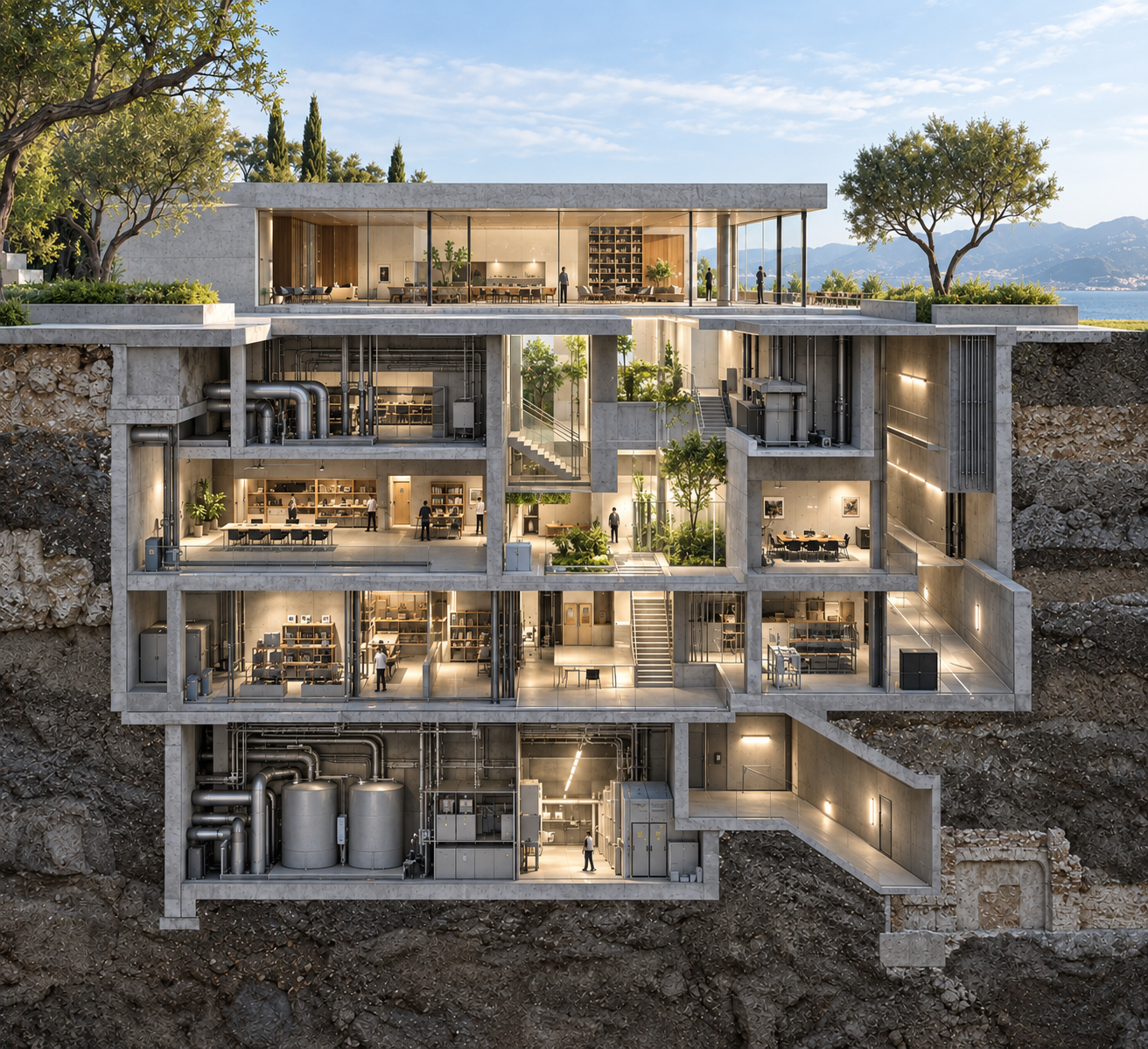
Upstream are the things that actually shape an organization: the founders' vision, the firm's original purpose, its design principles, the references it values, the way it works and the culture that develops over time. Those things are much harder to see, but they're what ultimately create a firm's personality.
One of the challenges today is that firms often begin with the downstream expression. They undertake a rebrand or rewrite their website, but because they're responding to the same trends and language, many firms end up sounding remarkably alike.
The real opportunity isn't to write different words. It's to understand the deeper forces that make the organization different in the first place. When those upstream elements are clear, they naturally shape everything downstream—from the way projects are delivered to the way clients experience the firm.
WHERE THE STORY BEGINS
Oomph: If a firm's story grows out of its culture, principles and way of working, how does an organization begin to uncover and articulate what makes it genuinely distinctive?
Jamie: One of the things I've come to appreciate is that this work often becomes necessary at an inflection point in a firm's life—succession, growth, a merger or an acquisition. Those are the moments when leaders have to stop and ask themselves: What is the unique value we're actually contributing?
I was fortunate early in my career to work in a founder-led practice. I sat a few metres away from two founders with very different leadership styles, approaches to clients and ways of thinking about architecture. None of that was written down. It wasn't taught formally. None of that was written down. It wasn't taught formally. It was absorbed through mentorship and apprenticeship—simply by watching how they worked every day.

I think we've lost some of that. As firms grow, it's easy to forget that the culture began somewhere. It started with the founders' worldview, the way they approached clients, the references they valued and the behaviours they modelled. Over time, those things become so natural that people stop noticing them.
The challenge isn't to invent a new story. It's to recognize the one that's already there—to surface it, articulate it and make it something the next generation can understand and carry forward.
FROM STORY TO COMMUNICATION
Discovering a story is only the first step. The next challenge is communicating it.
That's often where architecture firms struggle. They may understand what makes their work distinctive, but expressing it clearly—for clients, publications, proposals or the public—is another discipline altogether. To explore that question, I turned to Stefan Novakovic.
THE EDITOR’S EYE
Oomph: Having reviewed hundreds of project submissions over the years, what immediately catches your attention as an editor? What separates the projects that stay with you from those that quickly fade into the background?
Stefan Novakovic: One of the things that surprised me early in my editorial career was sitting in editorial meetings and seeing how easily projects could become reduced to quick visual judgments: I like this one. I don't like that one. When architectural journalism operates that way, it inevitably gravitates toward spectacle—the dramatic image, the famous architect or the visually striking project.
But for me, that's only part of the story.
The projects that capture my attention aren't necessarily the biggest or the most visually dramatic. They're the ones that express a clear idea. They reveal what the project is trying to achieve, why it matters and how the design connects to a broader cultural, social or human story. Good photography may open the door, but it's the underlying narrative that holds attention.

Take a modest residential renovation by a small, up-and-coming architecture studio as an example. The project wasn't memorable because of its budget, scale or the profile of the firm behind it. It stood out because every design decision—from its unusual use of glass to its spatial organization—supported a clearly articulated idea rooted in the clients' aspirations and lived experience. The architecture and the story reinforced one another.
A STORY IS BIGGER THAN A BUILDING
Stefan's point goes beyond what catches an editor's attention. The most memorable project stories connect the architecture to something larger—to the social, cultural or historical context that gives the building meaning.
Habitat 67 is perhaps the clearest example.
Stefan Novakovic: Habitat 67 tells a much bigger story than the building itself. It emerged at a particular moment in Canada's history, when the country was optimistic, ambitious and thinking seriously about how cities and housing might evolve. Moshe Safdie was exploring whether the qualities people associated with a house—privacy, outdoor space, a sense of individuality—could be brought into a much denser urban form.
That's what makes the project so compelling. You can talk about the concrete modules and the extraordinary form, but those things become much more meaningful when you understand the ideas behind them. The building becomes part of a larger story about housing, urbanism, experimentation and what Canada imagined its future could be.
And that story continues to evolve. Habitat can also be understood as an early exploration of modular construction—an idea that has become newly relevant as the industry looks for different ways to build housing today.
A CLEAR POINT OF VIEW
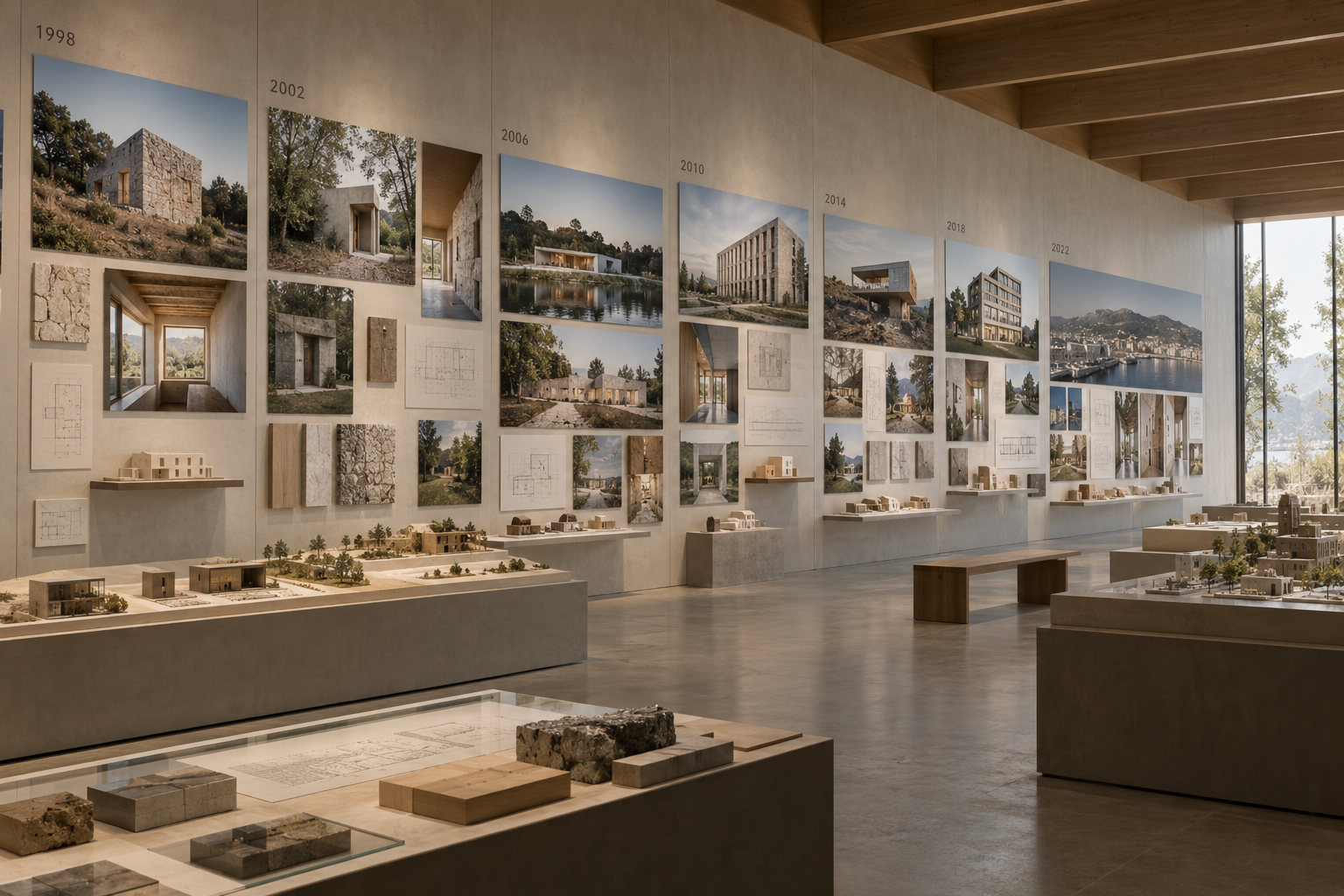
This brings us back to an idea that connects both conversations. Jamie Black approached it from inside the organization: when a firm has a clear sense of what it stands for, that story begins to run through everything it does.
Stefan Novakovic approached the idea from a different direction. From an editor's perspective, when a practice has a clear set of values and principles, individual projects become easier to understand and place within a larger body of work. Rather than each project standing alone, over time they begin to express a recognizable point of view.
Oomph: How can firms bring a more editorial perspective to the way they communicate their work—one that helps uncover the larger ideas and connections that may not be obvious to the people closest to the project?
Stefan: I think we're increasingly seeing architecture firms recognize that design alone isn't enough to communicate the full story of their work. Some are bringing writers, editors, critics and people with backgrounds in history and research into the process—people who bring a completely different skill set to the practice.
They can look at a project from outside the design team and see connections, ideas and narratives that the people closest to the work may not necessarily recognize. The result can be writing that does much more than describe the building. It can situate the project within a broader set of ideas and, over time, help articulate a much clearer point of view about what the practice values and the kind of work it wants to contribute.
WHAT THIS MEANS FOR YOUR FIRM
Recognize the different stories your firm is telling. There is the implicit story people experience through your culture, leadership, behaviours and the way you work. There is the story you deliberately articulate about who you are, what you stand for and what makes you distinctive. And there are the stories you tell about your work—your projects, ideas, expertise and the problems you solve. Together, these different levels of story shape how people understand and remember your firm.
The unspoken story. How people experience your firm—clients, project collaborators and employees—creates a powerful impression of who you are long before anyone reads your website. It's shaped by how you communicate with clients and collaborators, how projects are managed, how people interact internally, the policies and practices of the firm, the behaviours that are encouraged, and what the organization chooses to celebrate, recognize and prioritize. Together, those everyday experiences create a story about your firm whether you've ever articulated it or not.
Your firm's unique story. Before rewriting your website, brochures or other marketing materials, understand what genuinely distinguishes the firm—what you believe, how you work, what you do especially well and why clients choose you. Then turn those ideas into clear, memorable language that brings that story to life. That articulated story is your brand positioning.
The story of your buildings. A picture may be worth a thousand words, but architecture is one place where images alone can't tell the whole story. The story of a building begins with the big idea behind it—the vision, ideal or aspiration the project was intended to embody. What does the building represent, and what should people understand or feel when they encounter it? From there, the story is also about how that idea was brought to life: the challenges the project had to solve, the design decisions that responded to them, and the technical or innovative solutions that made the vision possible.
It all adds up. Over time, the stories your firm tells—spoken and unspoken—come together to create a clear and recognizable picture of who you are. The three should reinforce one another. If innovation is central to your firm's unique story, for example, people should experience that innovation in the way you work and see it demonstrated in the stories you tell about your buildings. When all three align, each strengthens the others, building a story that grows clearer and more distinctive over time.
FIVE QUESTIONS THIS ARTICLE ANSWERS
1. Where does a firm's story actually come from?
A firm's story grows out of much more than its marketing. It is shaped by its culture, leadership, behaviours, values and ways of working—and by how clients, collaborators and employees experience the firm every day.
2. Why do so many architecture and design firms describe themselves in similar ways?
Firms often begin with the words rather than the underlying story. When they draw from the same industry language, trends and ideas, their messaging naturally begins to sound alike.
3. How can a firm uncover and articulate what genuinely makes it distinctive?
Start by understanding what the firm believes, how it works, what it does especially well and why clients choose it. Those ideas become the foundation for a clear and memorable brand positioning.
4. What makes the story of a building compelling and memorable?
The strongest project stories go beyond describing what was designed or built. They communicate the larger vision or idea behind the project and show how design, technical expertise and problem-solving brought that vision to life.
5. How do a firm's culture, brand positioning and project stories work together?
Together, they build the larger story people come to understand about the firm. When the unspoken story, the firm's articulated positioning and the stories of its work reinforce one another, that story becomes clearer, more credible and more distinctive over time.
