
A Sea Change in Construction

A conversation with Terry Olynyk on what is shifting for builders, designers, and owners — and how firms can stay competitive through it.
How buildings are planned, financed, designed, and built is changing in fundamental ways. Every firm in the market has to reassess what it does and how it does it. Change is hard, but the firms that recognise this and act now will end up in front.
Terry Olynyk has spent much of his career operating at the intersection of construction, innovation, operational strategy, and digital transformation. Having led major construction organizations through periods of growth, change, and technological evolution, he is now focused on helping firms navigate the next wave of disruption through his work at BLDscale Consulting, where he advises owners and leadership teams on AI, digital strategy, operational transformation, and modern methods of project delivery.
The conversation that follows is not construction advice. Oomph is a marketing and business development firm, and we look at these shifts through a competitive lens. What follows is a practical discussion about where the industry is heading, what firms are underestimating, and how construction companies can position themselves to stay competitive as technology, delivery models, and workforce realities continue to evolve.
Framing the Moment: A Convergence of Pressures
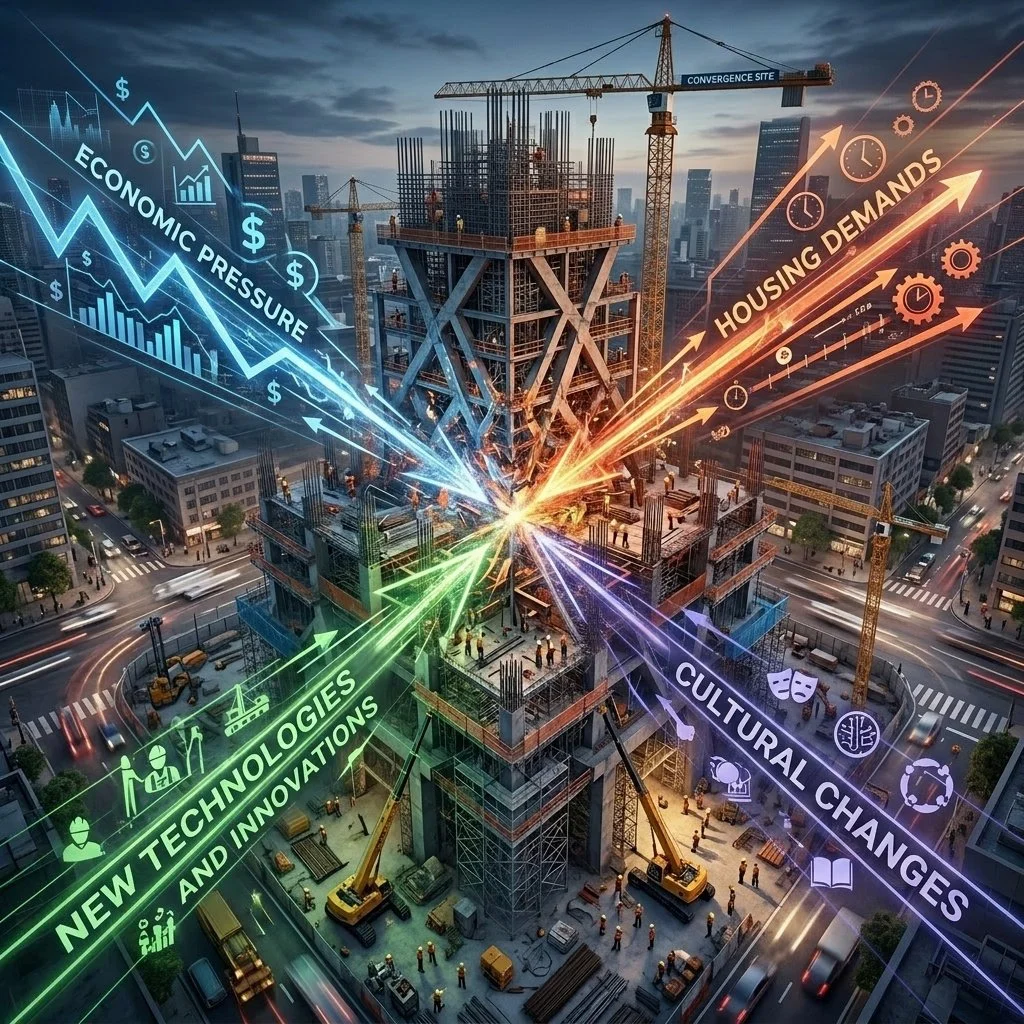
Oomph: A lot of pressures are converging — economic volatility, shifting sector demand, housing urgency, an expanding range of tools. What are the most meaningful shifts shaping how construction firms need to operate today?
Terry Olynyk: In the Toronto market, the residential slowdown has prompted subcontractors to reassess how they operate. Many who are still building have condensed their crews to their strongest performers. There is a misnomer that residential productivity has never been better. The reality is narrower than that. The firms still building are working with the best crews available to them.
The forward-looking risk is what firms should be thinking about now. When the market turns and demand rises quickly, the available trade base will be smaller than it was, and firms need to consider how they are preparing for that.
A second shift has been predicted for a while: the retirement of senior people in construction, both on the tools and on the professional side. Decades of accumulated skill and discipline are leaving the market, and the workforce coming in brings a different set of perspectives. Foremen with 35 or 40 years on the job almost have a mental telepathy about what it takes to build, looking at each other and understanding who has to do what, and when. That depth is leaving the market, and as it does, coordination on site will become more complex.
What matters most in construction is flow, keeping the job moving forward. As workforce composition changes, sustaining flow will call for new approaches to coordination and delivery. That is where modern methods of construction, industrialised construction, and kit-of-parts thinking become more relevant. The question worth putting at the front is how you are positioning your project to be assembled as a kit of parts, rather than built bespoke.
Delivery Models: From P3 to Progressive Design Build
Oomph: Along with wide-ranging economic and technological change, we are also seeing process changes. Over the past 15 years there has been a wide range of delivery models, including P3, IPD, and alliance models gaining ground in healthcare, transportation and infrastructure. What is becoming the new baseline?
Terry Olynyk: I remember when P3 first launched in Ontario. I was on the P3 team for a hospital project at the time. It was a fascinating process: new, highly competitive, highly strategic, and very covert. The levels of non-disclosure and the fear about asking a question were extraordinary. We spent hours on what questions we would ask and how we would receive the answer.

Ultimately, my team was not successful, but we learned a lot. We did eventually win our first P3, and what stood out to us was the chance to be innovative and free-flowing. The risk transfer was balanced. If you were creative, if you could interpret the documents, if you were productive, you had a chance to make some good money.
Over time, P3 became more prevalent and more prescriptive, which took the innovation opportunity away from the general contractors. The risk transfer pushed more and more onto contractors, many of whom didn't grasp the implications until late in their projects, when liquidated damages kicked in. We have seen this play out on many large, high-profile projects. Today companies understand the pitfalls, and contracting leaders are now partnering to share risk and enhance their competitive position.
The reality is that the P3 model is literally broken now, and fewer companies are bidding on these types of projects.
Oomph: There was a recent contract that no one would bid on.
Terry Olynyk: Yes, this is a problem for government procurement. We now have projects that are literally billions over budget, with no real competition for the construction contract award, and the government is duty-bound to deliver them.
“The only way forward is a balanced-risk approach, and you can get there through Integrated Project Delivery, alliance, or progressive design build. ”
Major current infrastructure projects are using progressive design build, with open acknowledgement in contractor presentations: the client understands the risk balance, they are willing to take the risk, they recognise that participating companies need profitable projects, and they want to create the fairest possible approach.
In Ontario, we are seeing something similar with some hospital patient towers. The contractor assembles a competitive response and budget, gets to know the client's needs, and gets clear on the risks and rewards. They then reassemble a second budget, which is what makes the project "progressive" and locks a number in. It is a much fairer approach.
Oomph: It is also a smarter approach, because these projects are so complex and long that the chance of something going sideways is always there.
Terry Olynyk: As a contractor, if you want to be motivated to bid, that is the only path forward. It will not be P3. So, the question is: are you skilled enough to navigate progressive design build? What does your résumé look like? How do you get on a bid team? It's complex. Being a competitive bidder is going to be more than price. It is capability and innovation. And the last piece is being able to tie innovation to your productivity.

Oomph: Most of what we have just discussed is large public procurement. Do you see the private sector, including multi-unit residential and large commercial mixed use, adopting more collaborative or progressive models, or is there going to be a divergence?
Terry Olynyk: If I am a developer in the residential space, I am likely building purpose-built rental, not condo, for the foreseeable future. I have time. What I would do is drive the design team to produce a lumpsum bid package and procure it under a CCDC 2 lump sum, the opposite of progressive design build.
More construction companies are moving in that direction because it gives them an absolute working set of drawings and the chance to make a lot more money if they are organised. You are now seeing large builders buying residential contractors looking to large residential markets, and the way they like to procure is lump sum. It lets them take full control and deliver as fast as humanly possible. If you are a developer bidding a residential project right now, you should expect a fee of one and a half to two and a half per cent, and that is high in this market.
Oomph: Doesn't lump sum result in projects where people cut every corner and substitute the cheapest material?
Terry Olynyk: No. When you have a specification, you have to follow it. Your drawings and specifications have to be thorough and crystal clear about exactly what was bought. The pressure goes on the design team. As the owner, you have to do incredible due diligence to make sure the specifications and drawings really are what you are looking for. You cannot hand off something you have not reviewed with intense scrutiny and expect it to withstand a lumpsum bid.
Oomph: So, this is also of great interest to design firms.
Terry Olynyk: Yes. Over the past 15 to 20 years, residential designers have had no shortage of work. In many cases, developers would engage design teams quickly and move projects forward under significant time and cost pressure.
To manage costs, developers often procured architectural, structural, mechanical, and electrical services separately, rather than investing in a fully coordinated design approach. That lack of integrated coordination created gaps in the drawings and documentation, which then carried through into construction.
As a result, the industry saw a significant increase in extras, delays, and inefficiencies on site. In that sense, construction management, particularly in the condo sector, has been under real strain.
That approach is no longer sustainable. Going forward, design firms will need to be much more rigorous in how they coordinate, document, and deliver their work in order to remain competitive.
Oomph: Owners figured they could negotiate with each sub separately rather than have one prime lead?
Terry Olynyk: It depends on the procurement. Under a CCDC 5A, yes, the owner is procuring and negotiating with all the trades, the contractor, and the consultants. Under a CCDC 5B, the owner has assembled a design package they have paid for, hired a general contractor, and the GC then procures the subcontractors. So, if you are a construction company or a design firm, you must become well versed in these models. That is the way to stay competitive.
Where Do You Even Begin? Model-First Construction
Oomph: A construction company reading this will ask: we hear you on delivery models, software platforms, field technologies. Where do we even begin to stay competitive and be ready when the next wave of demand comes?
Terry Olynyk: The first thing you need to understand, as a subcontractor or a general contractor: where are the risks in the project? Where is the design actually at? What are you agreeing to about how you engage with the client, your responsibility for the design, and your ability to shape gaps in the design before construction starts?
“Once a client is ready to choose its general contractor and subcontractors, they should invest in pre-construction services with a GC highly skilled at delivering a digital building model.”
That model, built in BIM software like Revit, is the shared coordination tool every party works from through design and construction. Model-first is where everybody now needs to participate. Subcontractors often think being involved in the Revit model is not their responsibility. A lot of them do not participate, and they are not set up to exchange the model back and forth with a GC. That is the wrong approach. You need to be fluent in BIM. You need to understand what level of design, Level 200, 300, 400, or 500, means for you, and what it means to the GC to get that level of detail.

As an owner, you need to instruct your design team to share the Revit model with the contracting team. A good general contractor will federate the model, bringing the architectural, structural, mechanical, and electrical models together into a single coordinated model and using it for clash detection.
In pre-construction, you are involved early enough to intercept the design at key stages, 25, 50, 75, and 100 percent design development. Beyond that point, the focus shifts to what remains, what the owner wants to change, and locking the design into tender and construction documents. Designers are held to account through tools such as a Power BI dashboard, a BIM execution plan, and clearly defined gates for when the design is delivered to the general contractor. Then you attach the model to the schedule, creating a 4D model. At that point, you have a clear understanding of what is being built. The design phase is complete, and responsibility shifts fully to the contractor to manage logistics and sequencing.
Tie in cash flow, and it becomes 5D. From there, you can integrate safety, through safety-by-design, and carbon. Tools like EC3 allow you to measure the carbon impact of each component in the building, provided it has an Environmental Product Declaration. The EPD defines the embodied carbon of each unit of material. If you design around EPDs, you can understand and manage your carbon footprint.
The final piece, and probably the most important, is that there is now technology that lets you interact with these models very effectively. One example is Vim AEC. Its creator, Errol Woodford, was one of the three founders of Revit. He has now developed a product that uses video game engines to let you interrogate and view a model. You can enter a highly sophisticated model, pair it with AI, Claude for instance, ask a series of questions that draw directly from the model, and receive the information you need. It’s a powerful capability, and Vim is the future direction to achieve a model that is the single source of truth.
The model also carries through construction. There are products like BuildDots, a wearable camera that captures site conditions. As people move through the site, the AI identifies what has been built and compares it back to the model. As long as the model is accurate, and the construction aligns with it, you gain immediate insight into productivity. In effect, you have a continuously updated as-built, every day.
When the project is complete, you are left with a digital representation of the building. During commissioning, all project documentation is loaded into the model as static assets. At the same time, live systems being monitored, through IoT or Bluetooth, such as pumps, motors, elevators, run hours, and bearing performance, can be integrated and measured through the model. You now have a digital twin to manage the facility and to do what BIM was always intended to do, support the ongoing operation of the building.
Oomph: This is the digital twin model the industry is now increasingly focused on.
Terry Olynyk: Right. But it has to start with the owner being clear upfront about what they want at the end of the process, an actual digital twin, and how they plan to use it. Designers and construction teams need to keep the model alive so that, when it is handed over, the owner can use it to operate and maintain the facility.
You need to be very prescriptive about what you expect from the model, and very clear about what you want from your digital twin from the outset, as soon as you begin assembling your design team. Too often, that level of clarity is missing, and the handover does not happen as it should.
AI Literacy and the Real Differentiator
Oomph: Say I own a construction company and I am committed to moving in this direction. What do I put in place at an operational level to get to where you are describing?
Terry Olynyk: Let me start with subcontractors, because they are the most at risk. What got them here will not get them there. Many of these are generational firms, now in their third generation, with a mindset of “this is how we have always done it.” There is an awareness that technology is coming, but often no real movement.
“AI is going to change everything over the next year and a half, and firms that stay on the sidelines are going to be caught off guard. ”
Taxi drivers once had the market locked up, especially those who had invested heavily in licences. Then Uber arrived, and within months the model was disrupted. That same kind of shift is coming for firms that are not becoming AI-literate and not actively using these tools.

Companies need to start with the recognition that they require a digital roadmap and a digital strategy. The environment has changed. The advantage with AI is that it is widely accessible. It does not require major capital investment, but it does require understanding and guidance. The first step is simply to begin. When institutions like the U.S. Department of Labor are emphasizing AI literacy as a fundamental skill, it signals how critical this is for firms that want to remain competitive.
From there, the focus needs to move beyond generative AI to agentic AI. Generative AI is useful, but it is limited. It responds to prompts and provides information when asked. Agentic AI, by contrast, acts. It operates more like a digital worker, understanding context and taking action within a defined environment. These tools are becoming increasingly accessible, even for firms without deep technical expertise. The companies that begin to understand and deploy agentic AI effectively will move significantly ahead.
However, there is a second phase to this. As more firms adopt these tools, technology itself will no longer be the differentiator. AI will become widely available and relatively inexpensive. What will set firms apart is how their people use it.
This is fundamentally a people challenge, not just a technology one. AI can draw on past information, but it does not replace judgment, creativity, or coordination. Those still come from the team.
The real question is how people work together in using these tools. Think of a team in a rowboat. Everyone needs to move in sync for the boat to move efficiently. In AI terms, this is the “golden string,” a shared understanding of how the technology connects to the company’s objectives. Everyone needs to understand that context and align their efforts to it. That is where the real advantage will come from.
Tools, Budgets, and the Real Roadmap
Oomph: I use ChatGPT, Claude, Copilot, and Perplexity. Each has strengths in different areas. Which are most suitable for the digital strategy you are describing?
Terry Olynyk: There is no silver bullet. Many companies have limited their use of AI to Copilot because of the safety and security that come with already being in the Azure cloud and using the Microsoft suite. That is fine. It is a good place to start and build literacy. More advanced firms will begin to move beyond Copilot and explore other platforms. For a typical construction company, I would suggest starting with Copilot, then comparing it with tools like ChatGPT and Claude. It is important to understand how each behaves differently.
Oomph: When a company says, help us start building an inventory of agents, what kind of budget should they expect?
Terry Olynyk: That is too much to take on at the outset. This needs to be deployed over time. You need a digital roadmap with clearly defined gates, 30, 60, 90 days, and then quarterly. The first step is to bring your entire organisation up to a baseline level of digital literacy, so people understand what AI does, its limitations, and the associated risks.
From there, you identify a smaller group, enable them to innovate, and begin building agents. At the same time, you need to maintain control. Do not allow development to fragment without oversight.
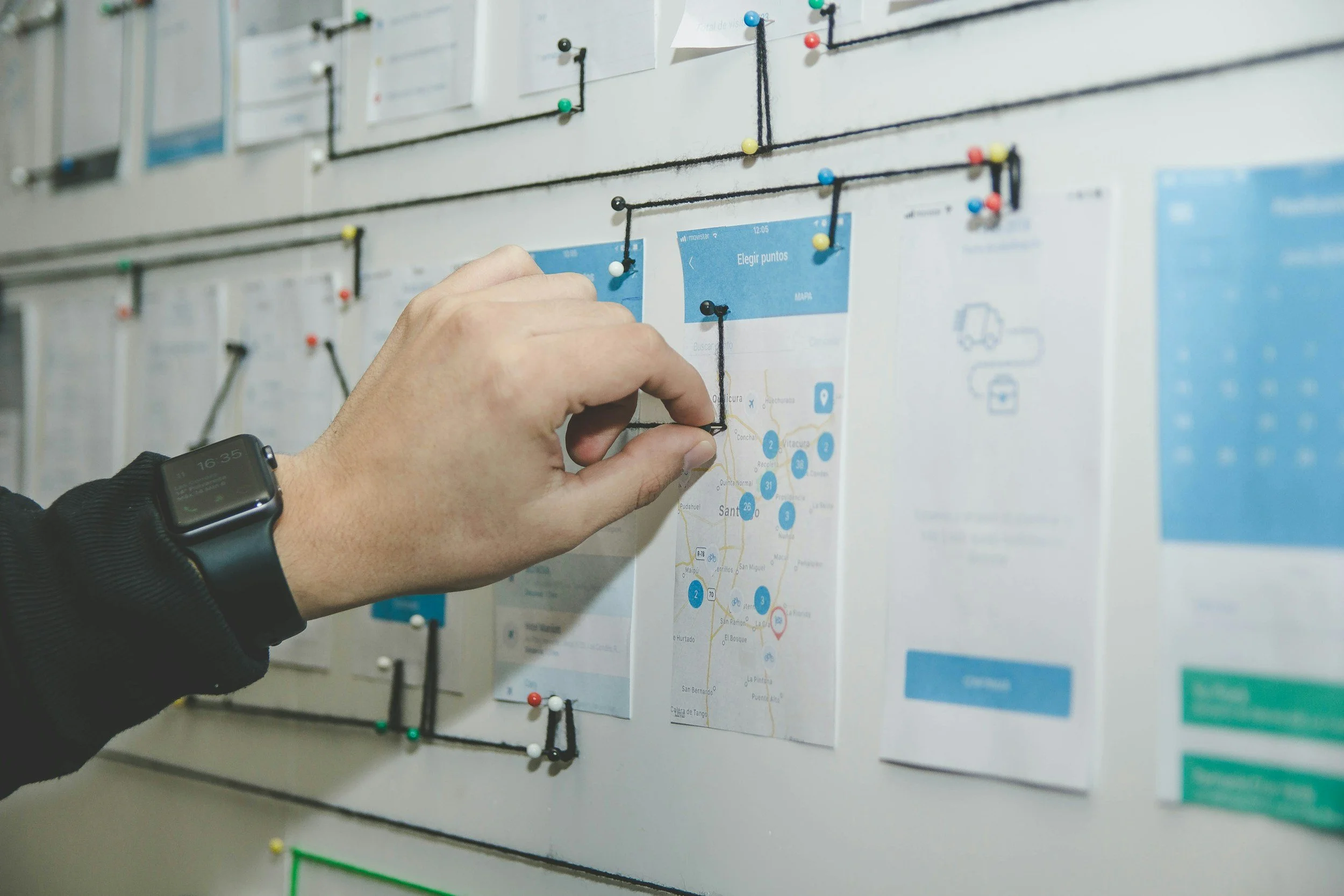
Start with three agents. Use them. Understand how they consume tokens and what the cost-benefit looks like compared to having someone on your team do the work. Look at how those agents work together. At the same time, define where you want to be in one, two, and three years.
The key is to begin, but not to overreach. Do not try to do everything at once. If you can successfully deploy three agents in your organisation, you are already well ahead of most of the market.
Oomph: Where do you see the biggest pitfalls as firms begin this work? The subscription cost is minimal, but applying it to real projects, putting review processes in place, and managing issues like hallucinations, where do firms get tripped up?
Terry Olynyk: The cost of onboarding AI is not primarily financial. It is an investment of time, energy, and people. The more significant cost is ensuring your infrastructure is set up properly, particularly moving into the cloud. If you are still operating on servers, that needs to change, not just for AI, but for cybersecurity. Organisations need to protect themselves from increasingly sophisticated threats.
Once you are in the cloud, you can begin to invest in more advanced, enterprise-level AI solutions. These are not insignificant costs, but they are manageable, tens of thousands, not hundreds of thousands. At that point, you can give the organisation access and begin deploying agents.
If you have people internally who can build and manage these agents, you are developing that capability in-house. The primary external cost tends to be the advisor or consultant guiding the process. There is a learning curve, and organisations often benefit from that support. That said, you do not need to rely on large consulting firms to build this capability. The objective should be to develop the knowledge internally, so the organisation can operate independently over time.
What Construction Firms Are Underestimating
Oomph: On the bigger picture, I see it on the design side as well, that many firms still do not fully understand the scale of the disruption. Where do you see construction firms underestimating what is happening?
Terry Olynyk: We are on the verge of something humanity has not experienced before. What is coming with AI transformation will be difficult for many to fully grasp. There are people in the market who are resistant to AI and choose not to engage with it. That is their decision, and it should be respected. But this is already in motion. There is no stopping what is coming.
It is a fundamental shift. Firms can either prepare for it or risk being overwhelmed by it. Over time, it will stabilise, but the environment we are moving into will be very different.
The most important step right now is to build a working understanding of AI and become self-sufficient with the tools. As adoption accelerates, those who have not engaged will find it difficult to keep up. Automation will continue to advance, and waiting to react later will be too late. This is the moment to act. Firms need to develop AI literacy and establish a clear digital transformation roadmap.
Oomph: We have focused on AI, and rightly so. What about robotics and other emerging tools? Or is establishing a digital strategy with AI the first step?
Terry Olynyk: Robotics is coming, but there is more time. If there is any industry where adoption will take longer, it is construction. Replacing people with robotics on building sites will not happen overnight. When it does begin to scale, it will move quickly.
For now, the priority should be AI literacy and learning how to use these tools effectively. Firms need a clear digital roadmap. And on any project, they need to be ready to work within a model, to communicate it clearly, and to participate fully in its development. That is foundational.
