
The Website as a Selling Tool
Marcello Gortana and Symon Oliver, founders of Tennis, work at the intersection of website design, product thinking, and operational clarity.

They partner with B2B teams that believe their website should function as a growth engine — not simply as a digital brochure. In their view, most organizations don’t struggle because they lack ideas. They struggle because their website or digital product was never designed to support how the business actually runs.
Whether the objective is revenue growth, cost efficiency, stronger positioning, or improved marketing performance, their approach treats UX, technology, and operations as one integrated problem. The result is clearer strategy, fewer handoffs, and digital platforms that are easier to evolve over time.
In the conversation that follows, we explore what AEC firms often misunderstand about their websites — and how to approach digital as a disciplined business tool rather than a one-time design exercise.

Oomph: In our industry, proposals are widely regarded as the primary selling document — they’re the formal sales offer. But before a proposal is ever submitted, prospective clients almost always visit a firm’s website. In that sense, the website shapes the first impression.
And yet, we still see firms with outdated or broken websites, because leaders believe they get all their work from referrals and don’t need to invest in digital. From a business development perspective, what separates a website that simply looks good from one that actively supports sales?
Marcello Gortana: It’s a big question, because the answer varies by industry — but there are patterns.
In sectors like AEC, where the sales process is proposal-driven and often formal, firms sometimes take a back seat on digital. We’ve seen that in other industries as well. Insurance, for example, historically had a very low digital benchmark — until one company made a significant investment and shifted expectations. Then everyone followed.
It feels like AEC is in a similar moment. Firms increasingly need to position and pre-sell through their website before the formal process even begins. At a minimum, the website is your brand’s public representation. Buyers are doing research — often before you know they are. And today, you can integrate tools that give your business development team insight into that behavior.
For example, we were recently invited to an RFP. I try to reach out early to clarify a few things before submitting, and within a short window we noticed multiple visits to our website from that organization. That kind of intelligence can help you adjust your sales approach in real time. Understanding who is visiting and what they’re looking at can meaningfully influence how you respond.
Beyond analytics, though, the core issue is understanding your buyer. What problems are they trying to solve? What do they care about? Your content strategy should reflect that — not just showcase projects, but address buyer priorities and pain points. That’s how the website becomes part of the selling ecosystem rather than a static brochure.
Oomph: That’s fascinating — especially the ability to see activity before a proposal is submitted.
You mentioned understanding buyers and aligning content accordingly. Let’s talk about that more concretely. Case studies, for example — and even how firms present their people. One of my frustrations is seeing design firm websites where the projects are visible, but the people are invisible. How do elements like team visibility and case study structure support business development?
Marcello Gortana: Case studies are critical — but structure matters.
When someone visits your website, they want to quickly determine whether you’ve worked with organizations similar to theirs or within the same sector. Relevance needs to be immediately apparent.
That’s where user experience becomes strategic. Filtering by sector, project type, or expertise allows buyers to find what matters to them quickly. If someone has one very specific need, they shouldn’t have to sift through dozens of unrelated projects to find it.
The goal is speed and clarity. Make it easy for them to see themselves in your work — and to understand why your experience is relevant to their situation.
Symon Oliver: We’ve found that architecture firms are often quite strong at defining sectors — education, residential, civic, commercial — and that makes filtering effective. Larger firms especially understand that specialization matters and that buyers are looking for that alignment.
Where firms can strengthen their approach is in connecting thought leadership and content strategy to performance.
Thought leadership isn’t just about positioning — it also supports search visibility. Case studies alone won’t generate strong search performance. Supplemental content — articles, insights, commentary — helps build keyword strength and improves discoverability. And that feeds back into business development over time.
Preparing for a Website Project
Oomph: Once a firm views their website as a serious business development tool — and decides to invest properly — how should they prepare for a website project?
Designers often focus on how the website looks. But from a visitors’ point of view, what matters is the site’s organization and content. Structuring case studies, gathering biographies, clarifying services — that’s a monumental undertaking.
What should firms do to get started — and how can they prepare to move efficiently?
Symon Oliver: First, they need to decide that the website is a project they’re willing to commit to. It’s not a small effort.
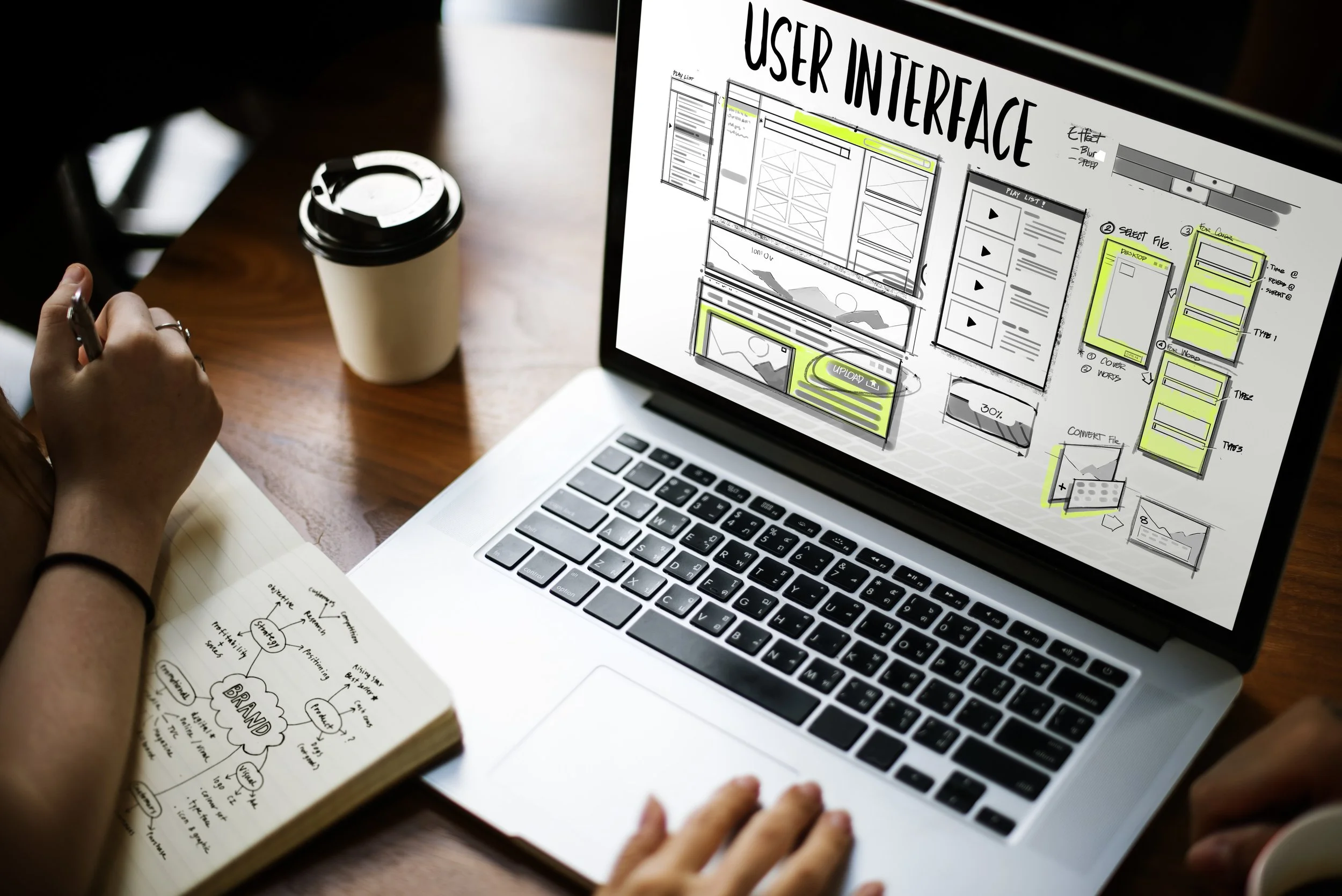
The biggest bottleneck is almost always content — but before that, we often find firms don’t have clarity around the purpose of the website. They’ll say, “We need a portfolio.” But that’s too narrow. A website is a business tool. It supports sales, marketing, positioning, and even data collection.
Once we reframe the purpose, we begin with a structured discovery process. We run collaborative workshops to clarify user groups, ideal client profiles, organizational structure, and objectives. That foundation informs the content strategy and information architecture.
Without that clarity, you’re building blind — and that’s when projects become inefficient and frustrating for everyone.
Oomph: You mentioned workshops. In my experience leading website projects over the past two decades, many firms skip that step entirely. They either rely on internal assumptions or conduct very light information gathering.
What does your workshop process actually address?
Symon Oliver: Discovery is a core differentiator for us. We follow what we call the H.O.L.O. framework — Humans, Organization, Landscape, and Objectives.
It’s not “secret” — but it is disciplined.
We bring the right people into the room and explore:
Humans: who are the audiences and user groups?
Organization: how does the firm actually function, and how do decisions get made?
Landscape: what market context are you operating within — competitors, peers, expectations?
Objectives: what are the measurable outcomes the site needs to support?
If you don’t have everyone at the table for a collaborative workshop where you’re asking those questions, you’re missing most of the picture.
And without that understanding, you can’t write compelling content, structure meaningful case studies, or design a user experience that reflects the brand. Everything — brand, UX, content strategy — connects back to that discovery phase. That’s why we do it before information architecture. Otherwise, we’re working blind.
Platforms: What Actually Matters (And What Doesn’t)
Oomph: There’s a lot of confusion in the marketplace about platforms.
I’ve worked using many platforms - custom builds using Ruby on Rails, to Joomla, WordPress, Squarespace and Wix, and each platform is good for specific situations. However, most firms, even small ones with a straightforward content set up, often request WordPress simply because it’s the best-known brand.
How should firms think about platform choice? If I’m a five-person residential practice, what do I actually need? And at what point does complexity justify a more robust platform?
Marcello Gortana: We’re technology agnostic. We’ve built everything from highly complex digital products to simple marketing websites.
But the technology choice should never precede the use case. When a client says, “We want WordPress,” our first question is: why? What problem are you trying to solve? What limitations are you experiencing? What are your long-term objectives? What are your ownership and maintenance expectations?
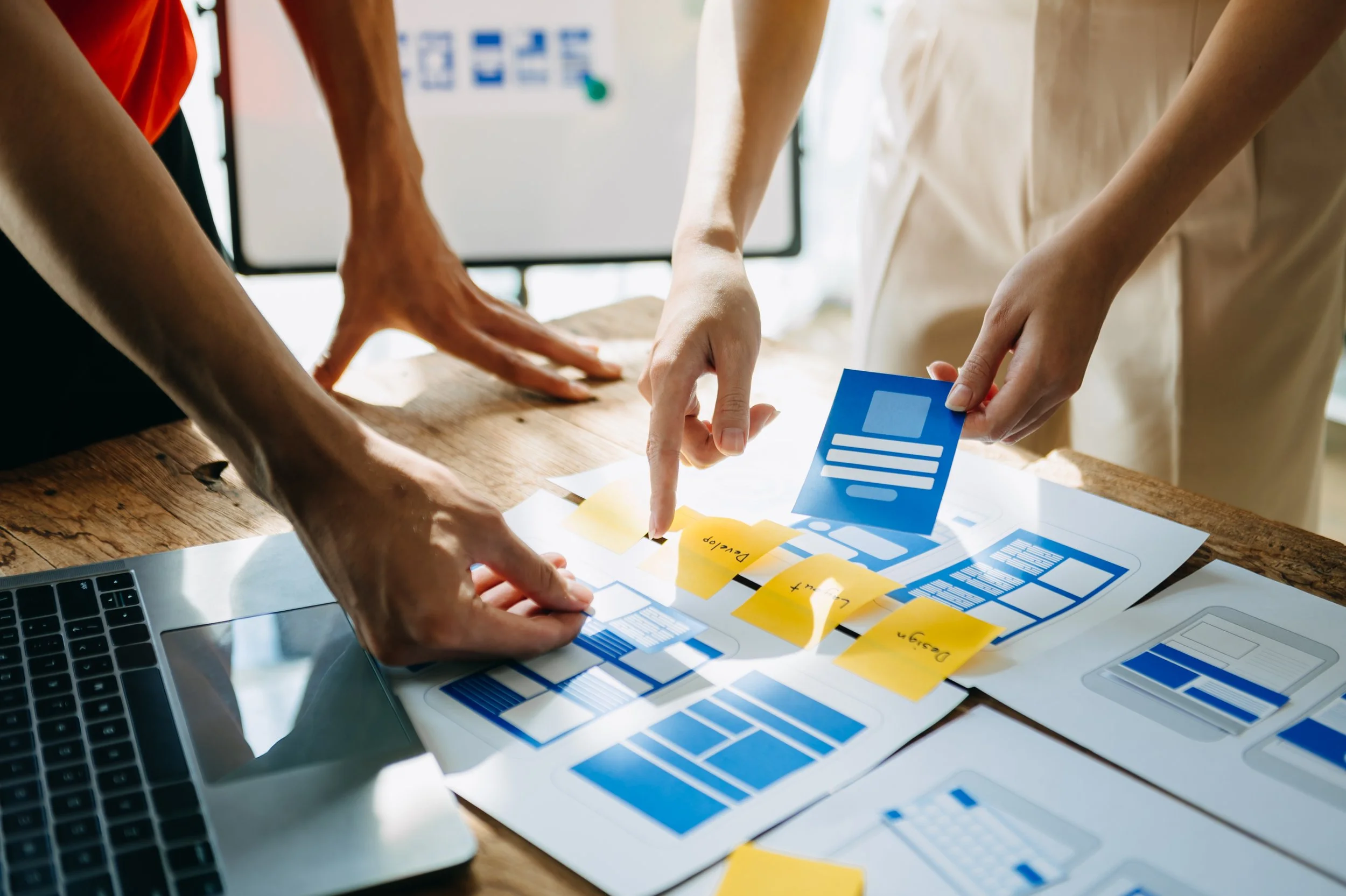
Platform decisions should follow clarity — not brand recognition. And the “best” platform shifts over time. New tools become popular, expectations change, and different platforms fit different contexts.
Right now, one platform we’re seeing strong results with is Webflow. It offers flexibility without unnecessary complexity. For many firms — especially those without internal technical teams — usability is critical. Depending on how complicated the site is, it can be very challenging to hand over the keys to someone without a technical background and expect them to manage it confidently.
There are cases where WordPress makes sense — particularly in larger institutions with IT mandates. But absent that kind of requirement, firms should remain open-minded and evaluate platforms based on scalability, maintainability, and fit.
Oomph: And for very small firms — say five people focused on private residential work — are platforms like Wix or Squarespace viable options?
Symon Oliver: They can be. Wix, Squarespace, and Webflow can all work well for small and mid-sized firms. The key is understanding constraints. If you’re constantly adding custom code to force a platform to do something it wasn’t designed to do, you’re introducing complexity and maintenance risk.
The more moving parts, the more likelihood something breaks down the line.
For smaller firms with straightforward needs, staying within the natural strengths of a platform can be smart. But if growth or functionality demands exceed those limits, that’s when it’s time to reassess.
Accessibility: The Legal and Strategic Imperative
Oomph: Let’s turn our attention to a topic that we’re hearing more and more about: accessibility. Accessibility legislation has been in place for years, yet many websites remain non-compliant. Enforcement now appears to be increasing.
When AODA requirements were first introduced, I remember working at firms where accessibility reviews were conducted, but they focused entirely on the physical building: entrances, ramps, clearances. The digital environment wasn’t even part of the conversation.
From what I’m hearing now, the government is stepping up enforcement with respect to website accessibility, particularly for firms with more than 50 employees, and organizations are being given defined timelines to comply, or they will be fined. I’ve even heard of fines reaching as high as $100,000 for non-compliant websites. This is clearly an area where many firms are exposed without realizing it.
What does accessibility mean in practical terms for a website? And why should firms treat this as not just important — but urgent?
Symon Oliver:
It’s interesting — architecture firms are very aware of accessibility in the built environment. But when we raise digital accessibility, many are surprised it applies to websites as well.

In Ontario, AODA requirements extend to the digital environment. For a long time, enforcement felt inconsistent, which meant many organizations didn’t prioritize compliance. That is changing. We’re now seeing more formal notices issued to organizations that are not compliant.
Typically, firms are given a defined timeline to remediate the site and present a plan for compliance. The process can be reasonable — but it requires action.
Accessibility is no longer theoretical. It’s a compliance and risk-management issue.
Practically speaking, the most common issues we see are:
Contrast ratios — insufficient contrast between text and background.
Alternative text (alt text) — missing or incorrectly applied descriptions for images.
Structural issues — heading hierarchy, keyboard navigation, and screen-reader compatibility.
Contrast is straightforward: text must meet defined ratio thresholds to remain readable for users with visual impairments.
Alt text is more nuanced. It’s intended to describe meaningful images for users relying on screen readers. But not every image requires alt text. Decorative images should be excluded — otherwise, users are forced to listen to unnecessary descriptions that interrupt the reading experience.
“Accessibility isn’t just about adding labels everywhere. It’s about ensuring the experience makes sense for all users. ”
Oomph: How can a firm determine whether their website is compliant? And if it isn’t, what should they do?
Marcello Gortana: There are scanning tools that can generate compliance reports and flag common issues. We can share one for readers to test their sites. But it’s important to understand partial compliance isn’t compliance. If a scan shows 80%, that still means you’re not compliant. Design Tennis offers a free accessibility tool here.
Requirements also vary depending on firm size. In Ontario, organizations over 50 employees face more significant financial penalties. In the U.S., enforcement is different — lawsuits can be initiated by private individuals.
Symon Oliver: In Canada, enforcement typically comes through formal notices. Firms are given timelines and expected to present a remediation plan. The process is often reasonable — but it’s still serious.
Accessibility should not be reactive. It should be built into the website from the beginning. Retrofitting is always more complex than designing properly from the outset.
What Most AEC Websites Still Get Wrong
Oomph: You’ve worked with many architecture, engineering, and construction firms. When you look at industry websites, what are the most common problems you still see?
Marcello Gortana: There’s a wide range of quality — but there’s also a recognizable pattern.
Most AEC websites are heavily portfolio-driven. That makes sense — these are project-based industries. But the execution varies dramatically. Some sites are simply dated or broken. The branding feels disconnected from how the firm positions itself elsewhere. The language isn’t aligned with the audiences they’re trying to reach.
More fundamentally, many sites aren’t speaking directly to the buyer.
Even among the stronger sites, there’s still a tendency to treat the website as a static showcase rather than a dynamic business tool. Compared to other industries we work with, AEC firms are often a step behind in integrating marketing and sales through the website.
Oomph: So, the website is more of a digital brochure than a strategic tool?
Marcello Gortana: Exactly. And sometimes that’s structural. If most work comes through referrals or formal RFP processes, there isn’t immediate pressure to evolve the website.
But expectations do shift. When one firm raises the standard — through clearer positioning, better UX, or stronger integration between marketing and sales — that becomes the new benchmark. And then others feel the pressure to catch up.
Why Website Projects Go Off the Rails — And How to Prevent It
Oomph: Website projects are notorious for expanding beyond scope, timelines slipping, and tensions rising. Why does this happen — and what can firms do at the outset to prevent the project from going sideways?
Symon Oliver: In most cases, projects don’t go off the rails because of poor work. They go off the rails because of mismatched expectations.
It usually starts with unclear scope and unclear governance. If roles aren’t defined — who is the project lead, who is the decision maker, who needs to be consulted — problems emerge later. A stakeholder who wasn’t involved early suddenly weighs in. A new team member joins midway. Someone who was too busy at the start becomes active near launch. That’s when surprises happen. We call it “stakeholder surprise.”

The way to prevent that is through discipline at kickoff. Explicitly define:
Scope
Decision authority
Review cycles
Approval process
And in larger firms, especially partnerships, we often recommend a committee model. The committee gathers input, but it holds decision authority. That prevents 25 different opinions surfacing at the eleventh hour.
Oomph: And what about scope creep? That seems to be where many projects quietly unravel.
Symon Oliver: Scope creep isn’t just about additional billing. It’s about protecting the timeline and the integrity of the work. Every new request — however small — has an impact. If there’s a fixed launch date, untracked additions put the entire project at risk.
A strong vendor will push back when necessary. Not to be rigid, but to protect the project. Clear change-request processes actually build trust, because expectations are transparent.
The Website Is Never “Done” — And What That Means Practically
Oomph: Earlier, you introduced a mindset shift that I think is important — the idea that a website shouldn’t be treated as a one-time project. In the design world, many firms still think: we launch the website, and we’re finished.
Can you expand on that? And if a firm wants to treat its website as a serious business tool, what’s a realistic way to think about ongoing improvement — without feeling like they’re signing up for an endless arrangement?
Symon Oliver:
This really is the biggest shift.
If you treat a website purely as a project, you try to cram everything into a single launch. It becomes high pressure, high stakes, and overly compressed. Every idea, every feature, every request gets forced into that one milestone.
If you treat it as a product, the thinking changes. You launch with a strong foundation — and then you iterate. You add functionality. Refine UX. Improve content. Incorporate new photography. Adjust based on analytics and user behavior. That incremental approach reduces pressure, prevents scope overload, and ultimately produces a better result.
Websites aren’t static deliverables. They’re living systems. And that doesn’t automatically mean a traditional “support retainer.” A well-built site shouldn’t require constant fixing. Where ongoing involvement becomes valuable is in improvement — not patching holes.
A practical approach can take a few forms:
Periodic check-ins: A scheduled audit every six or twelve months — reviewing usability, accessibility, analytics, and technical health — with a clear action list.
On-call support: As-needed assistance when updates exceed internal capacity or when specialized adjustments are required.
Value-driven partnership: A lightweight monthly or quarterly cadence focused on optimization — improving conversion paths, refining content, adding new sections, and using analytics to guide decisions.
The goal is simple: shift from “launch and ignore” to “launch, learn, improve.” That’s what prevents a major overhaul every few years.
Marcello Gortana: And if more firms adopted even a baseline check-in approach — a periodic UX, accessibility, or technology audit — the industry would be in a much healthier place.
Right now, firms tend to sit at two extremes. Either they’re very proactive, or they don’t look at the website for years and then face a full redesign cycle.
The firms that extract real value from their websites are the ones that recognize it’s an evolving business tool — not a one-time event.
