
Making the Most of Your Investment in AEC Conferences

Over the past fifteen years, the marketing and business development landscape has been reshaped by digital disruption. Search, social media, digital advertising, and content marketing have all moved to the forefront, claiming a growing share of attention and budget across professional services.
Now, with the rapid rise of artificial intelligence, that shift is accelerating even further.
And yet, in a relationship-driven industry like architecture, engineering, and construction, one of the most established tactics — participation in conferences and trade shows — remains not only relevant, but increasingly important. In a business built on trust, reputation, and personal connection, in-person industry events continue to provide something digital channels alone cannot: the opportunity to meet, build rapport, showcase expertise, and begin real conversations.
To explore why conferences continue to matter — and how firms are approaching them with more focus and discipline — we spoke with Kyla Rowntree, Business Development Specialist and Associate at RWDI. With over 20 years of experience, Kyla has built a reputation for driving business development through relationships, connecting clients with technical expertise, and shaping how firms show up in the market. Her work sits at the intersection of business development, relationship-building, and industry event strategy, making her particularly well positioned to speak to how conferences are evolving — and how firms can extract real value from them today.
Why Conferences Still Matter
Oomph: Over the past fifteen years, firms have seen an explosion of digital marketing and business development options, and now AI is accelerating that shift even further.
And yet conferences and trade shows continue to thrive.
From your perspective in business development, what continues to make conferences such a valuable investment for AEC firms today? And are there factors in today’s environment that may make them even more relevant than before?
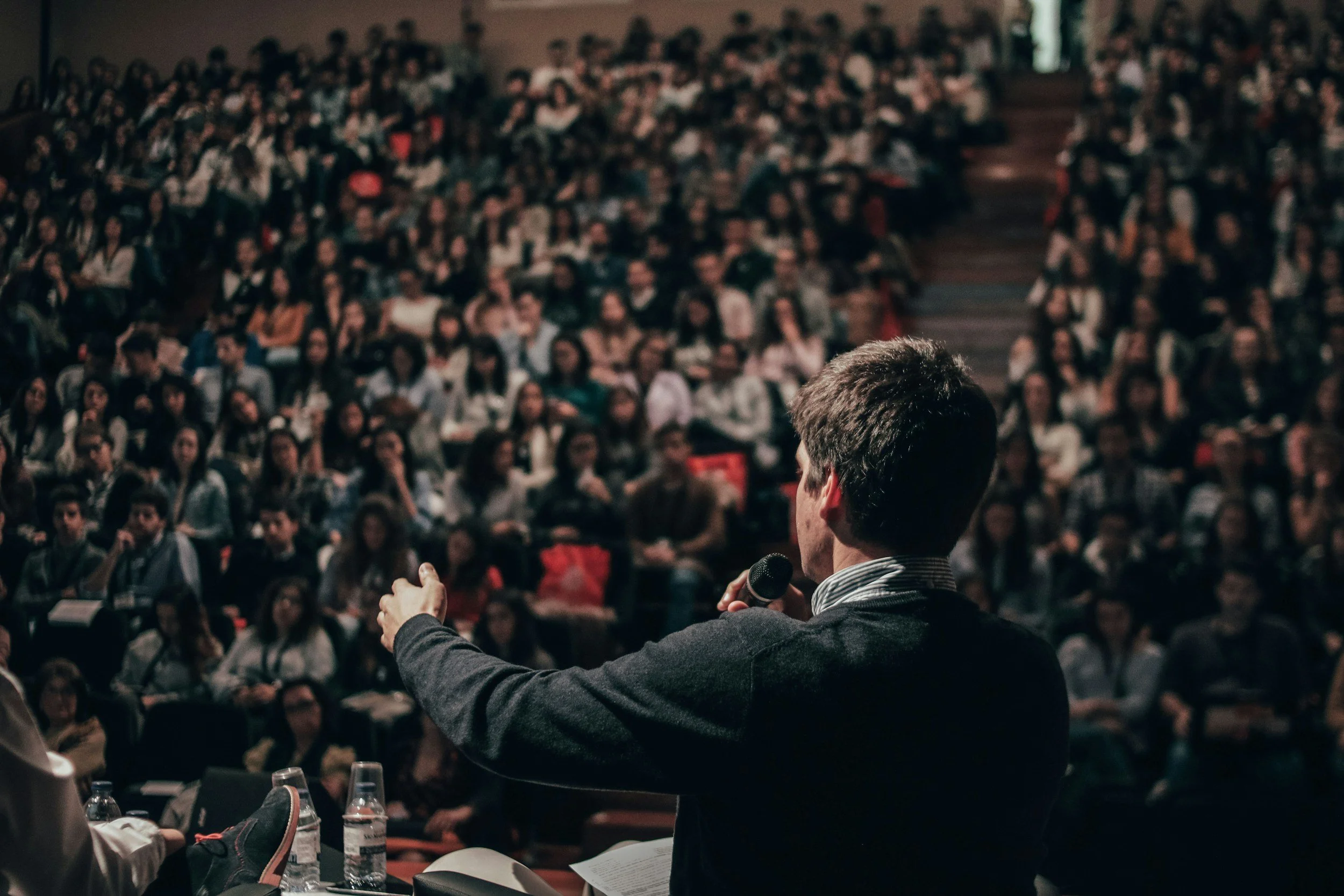
Kyla Rowntree: Conferences remain one of the most effective business development tools in our industry because they bring together the right people in one place.
AEC is a relationship-driven business. Clients want to know who they’re working with, and that trust is much easier to build in person than through digital channels alone. Conferences create that environment — whether it’s on the show floor, in sessions, or through more informal conversations.
What has evolved is not the importance of conferences, but how firms approach them.
There is a shift toward a more strategic and intentional approach to conference participation. Firms are becoming more deliberate about where they invest their time and resources — focusing on the events that align most closely with their sectors and markets, and concentrating their efforts accordingly. This also includes sending the right mix of people — technical experts, project leaders, and business development professionals. In many cases, that also means aligning participation globally around a smaller number of key events, rather than spreading efforts across too many.
When approached this way, conferences become far more than a visibility exercise — they are a platform for relationship-building and meaningful engagement that can lead to real opportunities.
Choosing Where and How to Participate
Oomph: Within the AEC industry, most sectors now have dozens of conferences and events each year — ranging from large, must-attend industry gatherings to smaller, more focused gatherings.
With so many options in any given sector, how do firms determine which conferences are truly worth attending? What criteria help distinguish between events that mainly gather industry peers and those that attract the right mix of owners, regulators, developers, and decision-makers who influence major commissions?
And once those priority events are identified, how do firms think about their level of participation — whether to attend, speak, sponsor, or exhibit? How does that approach differ when evaluating a new event or entering a new market?
Kyla Rowntree: With so many options available, it really comes down to being intentional about who you want to reach and what outcomes you’re targeting. The most valuable conferences aren’t just well-attended — they bring together a balanced mix of owners, developers, regulators, and decision-makers who are actively shaping projects and procurement.

I recommend looking at a few key criteria: the composition of the audience (not just peers, but clients and influencers), the quality of the programming and speakers, and whether there are structured opportunities for meaningful engagement — such as roundtables, workshops, or curated networking. It’s also important to consider the track record of the event: are real projects, partnerships, or procurements emerging from it?
Ultimately, the right conference is one where you’re not just visible, but relevant — where conversations align with your expertise and there’s a clear path from connection to opportunity.
From there, the question becomes how to participate.
That can range from attending, to speaking, sponsoring, or exhibiting — and those decisions are typically tied to how important the event is within the firm’s broader strategy and where the greatest opportunity lies.
There is also an important distinction between established events and new ones.
For conferences a firm already knows well, the focus is on how to show up most effectively and how deeply to invest.
When evaluating a new event — particularly in a new geography or unfamiliar market — the approach is often more exploratory. Rather than committing to a major presence immediately, firms may attend first to assess the audience, understand who is there, and gather the insight needed to determine whether the event warrants deeper investment in future years. This kind of scouting is especially important when conferences are used to support entry into new markets, where the level of investment is significant.
Preparation is absolutely critical. By the time a team arrives at a conference, there should already be a clear understanding of who they want to meet and how they plan to engage.
In the past, attendee lists made that process more straightforward. Today, particularly in regions with stricter privacy regulations, those lists are often unavailable. As a result, firms need to take a more proactive and resourceful approach to identifying who is likely to attend.
In my experience, that often involves a combination of research and what you might call “social listening” — reviewing exhibitor lists, directories, speaker rosters, and event programming, as well as paying attention to activity on platforms like LinkedIn where people signal their attendance. Industry networks also play an important role. Reaching out to contacts to understand who will be there can quickly build a picture of the likely audience.
From there, the goal is to translate that intelligence into action — identifying priorities, reaching out in advance, and setting up meetings before arriving at the conference.
Once that groundwork is in place, the next step is to prioritize and begin outreach in advance. Whether it’s setting up meetings, inviting people to visit a booth, or arranging time to connect during the event, having those touchpoints planned ahead of time significantly increases the likelihood of meaningful interaction.
Another important element is tailoring how the firm presents itself for that specific event. That might include preparing targeted messaging, developing event-specific materials, or directing people to a landing page that reflects the themes or audience of the conference. The goal is not to take a one-size-fits-all approach, but to ensure that conversations feel relevant and considered.
“Ultimately, the most effective preparation combines research, intentional outreach, and a clear plan for how the team will engage — so that once on site, the focus can shift from finding opportunities to making the most of them. ”
Equipping Technical Experts for Client Conversations
Oomph: In architecture and engineering firms, credibility often rests on highly specialized technical expertise. Yet conferences and industry events require that expertise to be communicated in a way that is accessible and relevant to clients — something that doesn’t always come naturally to highly technical professionals.
How do you prepare technical teams to participate effectively in those conversations? What kinds of preparation or guidance help technical experts translate their knowledge into discussions that resonate with clients?
Kyla Rowntree: In architecture and engineering firms, the depth of technical expertise is not in question. The challenge is how that expertise is communicated in a setting that is more conversational and less structured than a typical project environment.
Professionals who work on complex, highly technical subjects are not always focused on translating that work into the kind of language and interaction that happens at industry events. What helps is providing them with clear messaging that supports how they describe their work — not simplifying the substance but helping them express it in a way that is accessible and relevant to the audience they are speaking with.
That preparation often involves identifying key messages, framing how to explain complex ideas in a more conversational context, and ensuring that technical professionals feel comfortable engaging with a range of stakeholders who may not share the same level of technical background.
Often, the value of that arrangement lies in timing: the business development professional opens the conversation and understands when to bring the technical expert in, so that the specialist enters at the moment where their expertise is most relevant and most likely to resonate.
The goal is not to turn technical experts into salespeople, but to equip them with the tools and confidence to engage in conversations where their expertise is clearly understood, effectively communicated, and properly valued.
How Expertise Can Generate New Connections
Oomph: You also play a very distinctive role at industry events — moving through the room, connecting people, and opening conversations that often lead to deeper technical discussions. In many firms, however, technical experts are sent to conferences on their own, without someone naturally filling that connector role.
How do you see that dynamic working best? What role can business development professionals play in helping open those conversations and create the right moment for technical experts to step in and share their expertise?
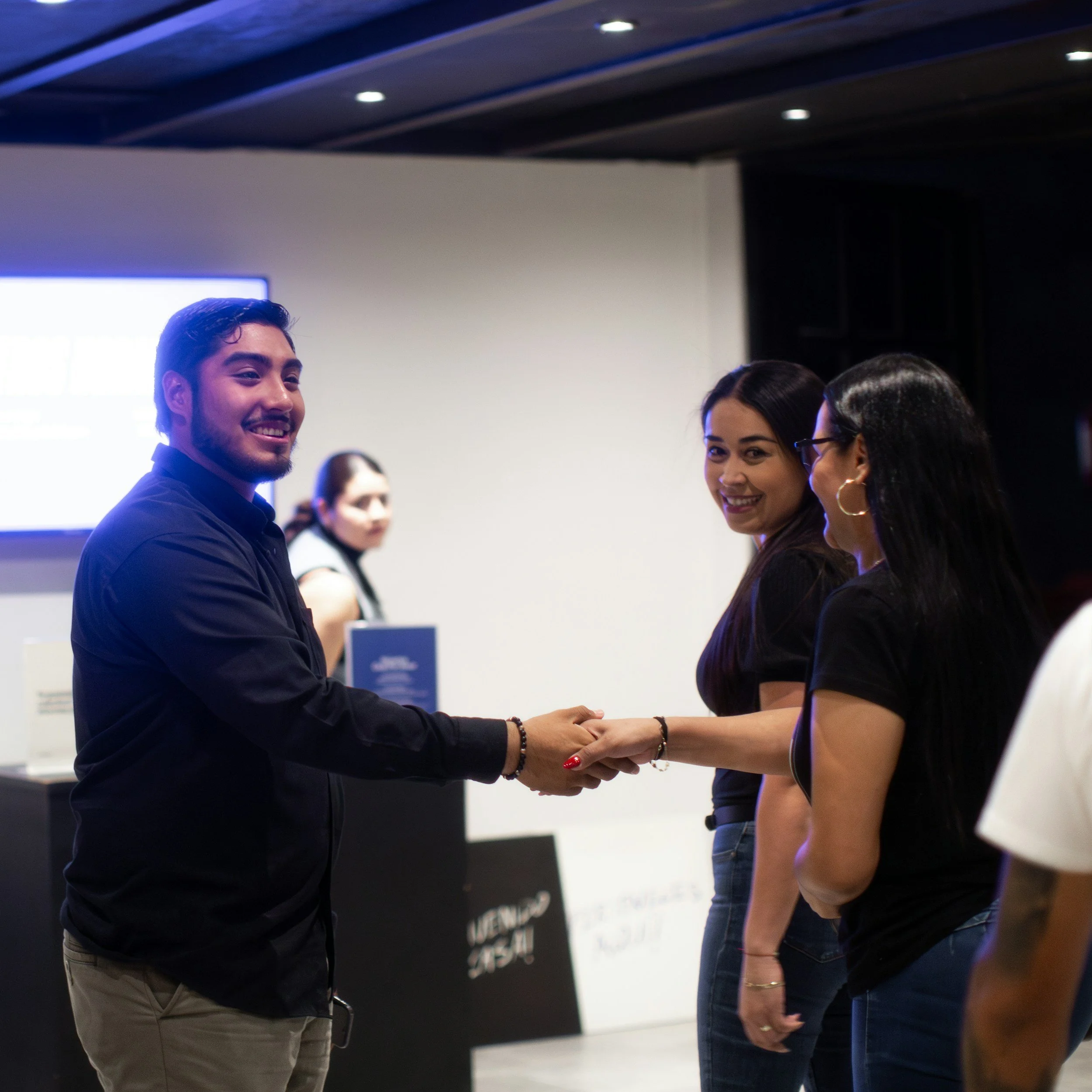
Kyla Rowntree: Equally important is how teams operate together at a conference.
In my experience, one of the most effective approaches is a partnership and collaboration between business development professionals and technical experts. The BD role often involves initiating conversations, making introductions, and creating the context for discussion. From there, technical specialists can step in to speak to the substance — answering questions, explaining approaches, and demonstrating expertise in a way that feels natural.
That “bridge” between the initial connection and the technical conversation is critical. It allows each person to play to their strengths, and it creates a much more comfortable and effective dynamic for everyone involved.
When that coordination is in place — when the right people are present, aligned, and working together — conversations tend to develop more naturally, and the level of engagement increases significantly.
Turning Conference Conversations into Opportunities
Oomph: Once the conference is over and teams return to their offices, the real work begins.
What does an effective follow-up process look like in practice, and how do firms coordinate between BD professionals, sector leaders, and technical experts to keep those relationships moving forward?
Kyla Rowntree: The follow-up phase is where the value of the conference is ultimately realized and the timing of this follow-up is critical as well.
After an event, teams often return with a large number of new contacts and conversations, and it becomes important to have a structured way to organize and prioritize those interactions fairly quickly.
In practice, that usually means distinguishing between different types of connections — potential clients, active opportunities, industry partners, or general contacts — and aligning on what the appropriate next step should be for each.
Equally important is coordination across the team. Business development professionals, technical experts, and sector leads all play a role in moving relationships forward, and clarity around who is responsible for follow-up — and what form that follow-up should take — is critical.
That follow-up doesn’t need to be overly formal, but it does need to be timely and relevant. It could be a meeting, a follow-up conversation, sharing content that builds on what was discussed. The key is to maintain the connection and build on it in a way that feels natural.
Ultimately, the goal is to turn a series of initial introductions into ongoing relationships.
“Conferences create the opportunity — but it’s the follow-up that determines whether that opportunity leads anywhere meaningful. ”
Extending the Value of Conference Participation
Oomph: Conferences often generate insights, conversations, and content that can extend well beyond the event itself.
How can firms carry that momentum forward and integrate it into their broader marketing and business development efforts?

Kyla Rowntree: One of the most effective ways to maximize the value of conference participation is to think of it not as a single event, but as the starting point for a broader sequence of communication and engagement.
In my experience, the firms that see the most impact are those that actively build momentum before, during, and after the event — and then carry that forward into their ongoing marketing and business development efforts.
That can take many forms. It might involve sharing insights or key conference takeaways with clients, developing articles or short pieces based on themes that emerged, or using presentations as the foundation for additional content such as newsletters or social media posts.
There is also an opportunity to showcase people and expertise more directly — highlighting the individuals who are speaking, attending, or contributing to the conversation, and reinforcing their role within the firm’s areas of specialization.
The key is that these activities are connected. Social media, thought leadership, client outreach, and event participation all work best when they are aligned and reinforcing one another, rather than operating independently.
When that alignment is in place, conferences become much more than a moment in time — they become part of a continuous dialogue with clients and the industry.
