
Never mind AI — the real trend about to reshape the AEC market is in-person
For the past year we’ve been spending a lot of time writing about change sweeping through the AEC world. The kind that forces firms to adapt — new technologies, new tools, new ways of working that are reshaping the industry in real time. And while keeping up with transformative change is important, it can also feel relentless. Every shift seems to require something new: a new capability, a new process, a new way of thinking.
But: something different is changing now.
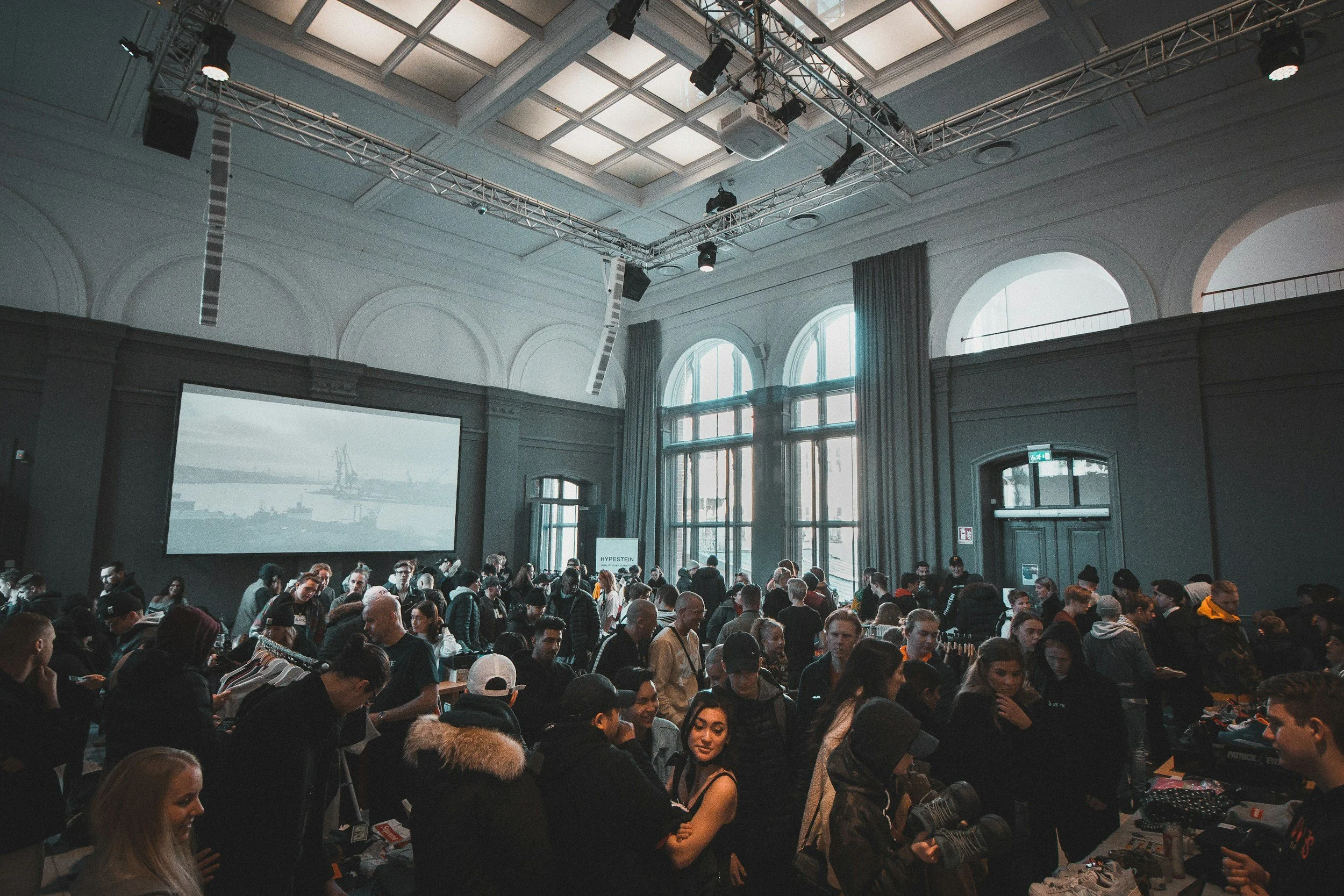
It's less about adapting to something new — and more about recognizing what never really went away: in-person contact. It began as a trickle, but now it seems there's a new article or feature in the business media every few days. And the reason it's caught my eye is that it will impact design and construction firms in two distinct ways. The first is in how design firms come to market — how they position themselves, how they stay visible, how they build relationships. The second is in the kinds of work that are about to begin surfacing.
The Market Rebalancing
A decade of digital acceleration and the surge toward e-commerce began to erode the amount of retail work available to design firms. Then COVID hit. The pandemic essentially killed what was left, bringing the entire retail, entertainment, and commercial sectors to a crashing halt. Store openings stopped. Malls stopped being built. All that work evaporated.
For retail design firms in North America, these past fifteen years have been very challenging.
But this situation is now beginning to change — and change fast. After more than a decade of watching retail and commercial work slowly disappear from their practice, design firms are about to begin seeing it come back. And this time, it's arriving with a few new twists.
What's Driving This Change
Two distinct currents are running underneath this shift, and both matter for how you think about market opportunity.
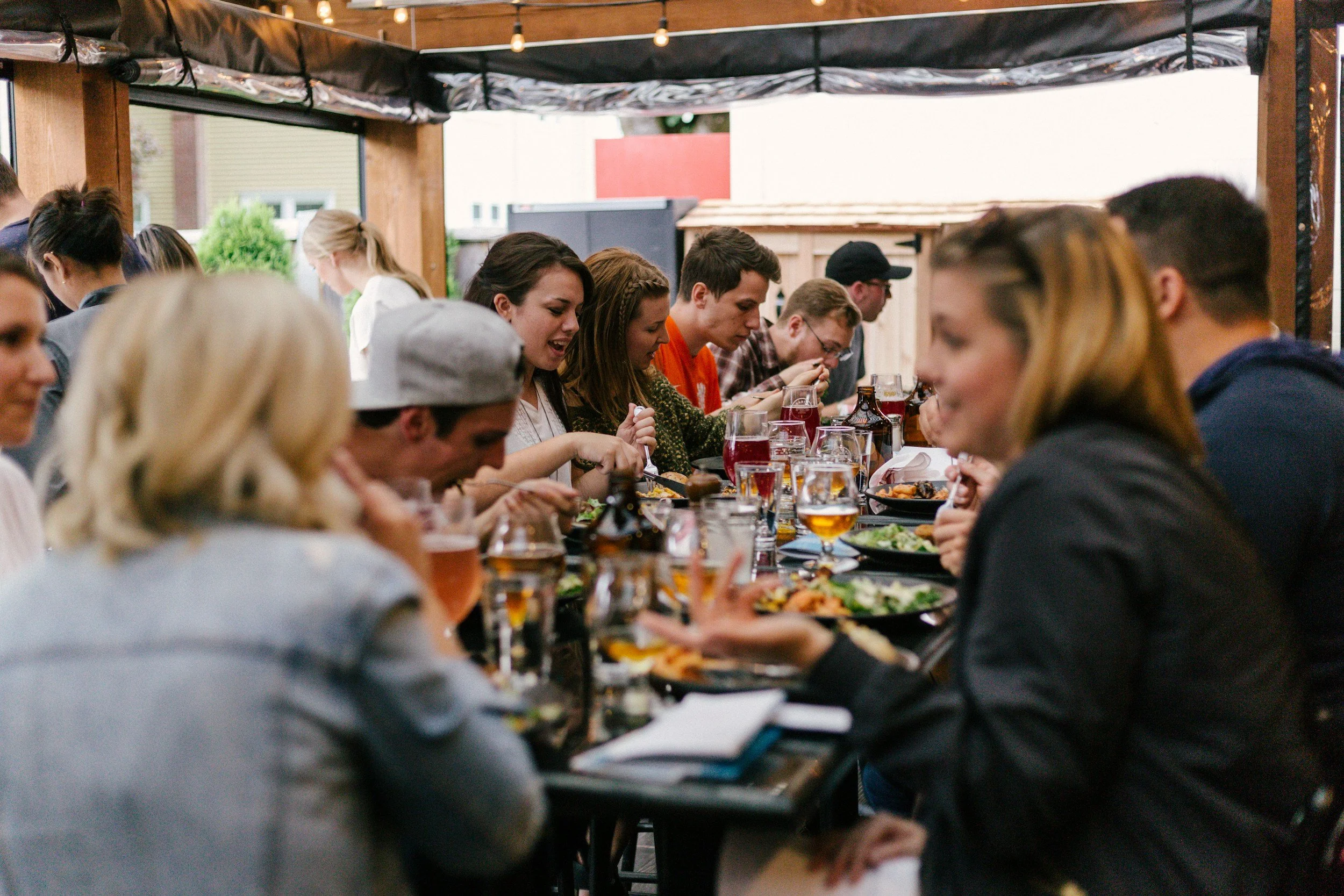
The first is generational. One of the most surprising drivers of this shift is Gen Z — a generation long assumed to be digital first. In reality, they are actively choosing physical environments, stores, malls, and what used to be called third places. They are not just shopping. They're gathering, socializing, and using physical space as a form of expression.
A majority now prefer in-person shopping. Nearly two-thirds are choosing stores over online channels. And a significant portion is engaging in physical retail on a weekly basis.¹ The Wall Street Journal documented this vividly, reporting that shoppers ages 18 to 24 made 62 percent of their general merchandise purchases in stores last year, compared with 52 percent for those 25 and older.²
What's happening here is not transactional. Physical presence has become a form of social proof, a source of identity, and a shared experience. Digital discovery is often the starting point. But it leads to in-person action.
Why? Because this cohort came of age during COVID and was deprived of key moments. What we're seeing now is not just preference. It's a form of catch-up, a return to shared experience that was taken from them.
The second current is technological. As artificial intelligence and digital automation accelerate, there is a growing recognition — both professional and personal — that human presence and human judgment cannot be replicated by machines. The World Economic Forum now identifies leadership and social influence among the fastest-rising skills in the global economy.³
This is not nostalgia. People are not rejecting technology or pining for the past. They are reasserting the value of human presence in an era where machines are increasingly capable of doing analytical work. The distinction is important. This is a rebalancing, not a retreat.
High-Value Decisions Are Moving Back In Person
This shift becomes even more pronounced in complex, high-stakes environments. Early-stage work may still happen digitally, but when decisions matter, when risk is high, when multiple stakeholders are involved — interaction is moving back to the room.
A significant majority of B2B buyers now prefer face-to-face engagement for complex purchases.⁴ Research consistently shows that in-person requests are dramatically more persuasive than digital ones. For senior executives, in-person meetings are the preferred channel when the relationship genuinely matters. The logic is straightforward: as in-person interaction becomes less frequent, it becomes more powerful. Scarcity creates signal.
Events Are Being Redefined
And you have to realize this is huge because the AEC industry relies on conferences and industry events. They're not just coming back. They're being redefined.
The same pattern is playing out in conferences and live events. Attendance is rising. More than half of event organizers reported year-over-year growth in 2024, with the majority planning to expand their in-person programming in 2025.⁵ Professionals say in-person events are important — and the primary reason is the networking, the serendipity, the density of relationships formed in a room.
For the design and construction industry specifically, these events are where relationships deepen, where new work emerges, and where visibility in the market matters most.
Physical Environments Are Being Reimagined

At the same time, physical environments themselves are changing. Retail, hospitality, workplace, and culture are beginning to converge into something more experiential.
Experiential retail is not transactional. It's less about transaction, more about interaction. The global experiential retail market is growing at nine to fifteen percent annually, driven largely by Gen Z and younger millennials drawn to spaces that offer genuine experience.⁶ Stores with strong experiential elements show measurably longer dwell times and higher sales.
The built environment is being asked to do something it has always done well: create the conditions for human experience. This includes everything from how a space is lit and acoustically designed, to how materials feel, to how sightlines work, to how movement flows through the environment.
Malls are being redesigned not as pure retail destinations but as community anchors. Common areas are being rethought. Multipurpose spaces that can shift between retail, dining, event, and social gathering are in demand. Mall owner Macerich is redesigning common areas with social experience in mind, painting staircases and architectural nooks in bright, eye-catching designs to encourage gathering and create spaces worth visiting.⁷
Online retailers are opening physical stores. Edikted, which started as a digital-only brand, has opened eleven physical locations with plans to expand, explicitly because the physical space creates value that online cannot match.⁸
Why This Matters Now
The Canadian design and construction industry is being compressed. The condo sector has largely collapsed in Ontario and British Columbia. The Ontario education market took a four-billion-dollar hit when federal immigration policy changed. Office towers are only now beginning to recover. For many design firms, the pipeline has been thin and the competition for work intense.
Retail and experiential projects are a bright sector opening up precisely when many others remain constrained. More importantly, they represent work that requires high creativity, imagination, and design intelligence. These are complex, layered, culturally significant undertakings that ask firms to think about experience, gathering, placemaking, and the role of the physical environment in human life.
For firms that have maintained expertise in this space — or that are willing to reconsider it — this is a genuine market opportunity.
The Positioning Question
If retail and experiential work is returning, and if clients are actively looking for firms with credible expertise in these areas, then the question becomes: are you visible for this work?
Is it featured on your home page or buried in your archive? Do your case studies and project examples signal that you understand placemaking, experience design, mixed-use integration, and the market dynamics that are driving demand?
The firms that move quickly — that dust off retail projects, that reposition their capabilities, that begin talking about the market opportunity they are seeing — will have a competitive advantage. Not because they are better designers, necessarily, but because they will be visible when clients begin actively searching for this expertise.
And they will be searching. The work is coming back. The question is whether you're positioned to capture it.
Footnotes
¹ L.E.K. Consulting, 2024 Consumer Study; Deloitte Consumer Survey data.
² The Wall Street Journal, "A New Generation of Mall Rats Has Arrived," feature reporting on Gen Z retail behaviour, 2025.
³ World Economic Forum, Future of Jobs Report, 2025.
⁴ Callin.io B2B Sales Research; Harvard Business Review on in-person persuasion effectiveness.
⁵ Bizzabo State of In-Person Events Report, 2024; Freeman attendee research.
⁶ UnivDatos and MetaTech Insights market research, experiential retail CAGR projections, 2024.
⁷ The Wall Street Journal, mall redesign reporting and Macerich CEO commentary, 2025.
⁸ The Wall Street Journal, Edikted store expansion reporting, 2025.
